
Build a Global Audience: AI Content Localization Strategy
Ready to go global? Traditional content localization is slow and expensive. AI changes that. Build a robust AI content localization strategy and connect with audiences worldwide.
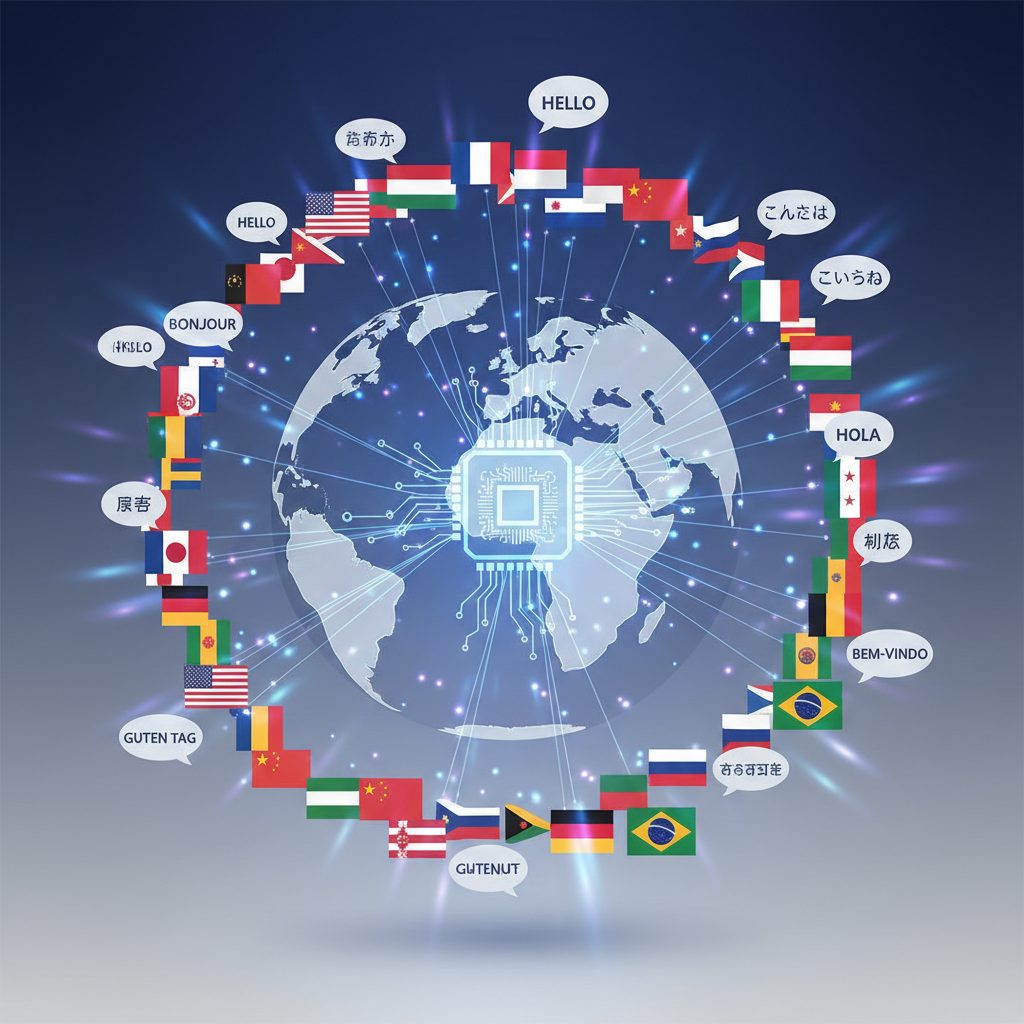
You've nailed your content in one language. Great. Now imagine multiplying that reach by ten, twenty, fifty. Without multiplying your budget by the same factor.
That's the promise of an AI content localization strategy. It’s not just translation. It's about culturally resonant content, delivered at speed, on a global scale. We're talking about reaching new markets, boosting brand affinity, and driving revenue you're currently leaving on the table.
Stop thinking of localization as an afterthought. Start thinking of it as a growth lever. And AI is the engine.
Why Your Global Ambitions Need an AI Content Localization Strategy
Traditional localization is a bottleneck. High costs. Slow turnaround. Inconsistent quality across vendors. It's a logistical nightmare for content teams shipping at speed.
We hear the arguments: "Our audience speaks English." Or, "We'll just machine translate, it's good enough." No, it's not. Google Translate is fine for a quick internal memo. It's terrible for brand-building content. It misses cultural nuances. It sounds clunky. It screams, "We don't care enough to speak your language properly."
An AI content localization strategy bridges this gap. It's not about fully automating human translators out of a job. It's about empowering them. It's about leveraging AI for the grunt work, the first pass, the scale. It frees up human experts to refine, adapt, and inject true cultural flair.
Consider the numbers. Companies with multilingual websites report higher conversion rates. Global brands with personalized content in local languages see significant bumps in engagement. AI makes this accessible, even for lean teams. You gain speed. You gain consistency. You save a fortune. It’s a no-brainer for growth.
Step 1: Lay the Foundation – Audit & Strategize
Before you dive into tools, you need a plan. Don't localize everything. Localize what matters.
- Content Audit: What content is critical for new markets? Product pages? Key blog posts? FAQs? AI content audits can help you identify high-impact pieces. Focus on content that directly impacts revenue or user experience.
- Market Selection: Which markets offer the highest potential ROI? Don't pick every country. Start with 2-3 key regions. Research their cultural nuances, consumer behavior, and preferred communication styles. What local slang is essential? What topics are taboo?
- Define "Localized": This isn't just translation. Is it transcreation (adapting the message entirely)? Is it mere translation with cultural review? Set clear expectations for quality and cultural adaptation for each content type and market.
- Brand Voice Guidelines (Localized): Your brand voice might need slight adjustments for different cultures. A playful tone in one market might be unprofessional in another. Document these regional variations. Maintaining brand voice in AI content is crucial, even across languages.
Practical Tip: Start small. Pick one market, one content type. Iterate. Learn. Then scale.
Step 2: Assemble Your AI-Powered Localization Stack
You'll need a combination of tools. This isn't a one-size-fits-all solution. Here’s what to look for:
Machine Translation (MT) Engines
Forget basic Google Translate. We're talking about neural machine translation (NMT) engines. These are far more sophisticated, understanding context and generating more natural-sounding output.
- DeepL: Often praised for its natural-sounding output, especially for European languages. Excellent for a high-quality first pass.
- Google Cloud Translation AI/Azure Translator: Robust, scalable, integrates well into existing workflows. Offers domain-specific models for better accuracy in technical or industry-specific content.
- Custom MT Models: For large-scale operations, training your own MT model on your existing translated content (translation memories) is a game-changer. It learns your brand voice, terminology, and content style, vastly improving output quality.
AI-Powered Translation Management Systems (TMS)
These platforms manage the entire localization workflow, from content ingestion to final delivery. They integrate MT, human review, and quality checks.
- Smartling: A leader in the space, offering robust workflow automation, AI-driven quality checks, and integrations with CMS platforms.
- Phrase: Comprehensive platform with strong TMS features, excellent for managing terminology, and integrating various MT engines.
- Trados (RWS): A long-standing industry standard, now incorporating advanced AI features for translation memory, terminology management, and adaptive MT.
Quality Assurance & Review Tools
AI isn't perfect. Human review is non-negotiable for brand-critical content.
- Grammar/Style Checkers (localized versions): Tools like Grammarly Business offer checks for multiple languages. However, nothing beats a native speaker.
- Human Post-Editing: The core of a successful AI strategy. AI does the heavy lifting, then professional native-speaking linguists review, refine, and culturally adapt the content. This is where your brand voice truly shines.
- AI-driven Quality Scores: Some TMS platforms use AI to score translation quality, flagging potential issues for human review. This helps prioritize and focus human effort.
Step 3: Implement & Optimize Your Workflow
This is where the rubber meets the road. A typical AI content localization workflow looks like this:
- Content Ingestion: Automatically pull content from your CMS into your TMS.
- Pre-processing (Optional): Clean up source text, identify repetitive segments for translation memory leverage.
- Machine Translation (First Pass): Your chosen NMT engine translates the content.
- Terminology & Style Guide Check: AI flags terms not conforming to your localized glossaries or style guides. This ensures consistency.
- Human Post-Editing (Crucial): Native linguists review the AI-generated translation. They correct errors, refine phrasing, and adapt for cultural relevance. This is where the human touch ensures authenticity and brand voice integrity.
- Quality Assurance: A second pair of eyes (or AI tool) checks for final errors, consistency, and adherence to specific market requirements.
- Publishing: Automatically push the localized content back to your CMS.
Example: Let's say you're launching a new feature. You write the blog post in English. Your TMS automatically sends it to DeepL for translation into German, Spanish, and Japanese. The German output goes to a human post-editor specializing in tech content. They tweak the tone to be more formal for the German market and ensure all technical terms are correct. The Spanish version might need a more casual, vibrant tone. The Japanese version will require significant cultural adaptation beyond mere translation. All reviewed content then goes live, often within hours rather than days or weeks.
Measure Success, Refine, and Scale
Once your AI content localization strategy is in motion, measure its impact. What's your ROI? Are new markets engaging? Is conversion up?
- Key Metrics: Website traffic from target countries, engagement rates (time on page, bounce rate) for localized content, conversion rates, localized SEO rankings, customer feedback.
- Feedback Loop: Continuously gather feedback from local teams, customers, and post-editors. Use this to refine your MT models, update style guides, and improve your workflows. The better your source content and the more feedback your AI gets, the better its output.
AI content localization isn't a magic bullet. It's a powerful tool that, when integrated into a well-thought-out strategy, empowers you to break down language barriers and connect with a truly global audience. Stop thinking local. Start thinking global, with AI as your guide. AI content localization isn't just about translation; it's about connecting.
This is how you scale. This is how you win in a global market. Ship content faster, smarter, and with genuine impact, worldwide.