Spotting AI-Generated Images: A Practical Guide for Content Pros
AI-generated images are everywhere. But can you tell the real from the artificial? We'll show you how to spot the fakes.
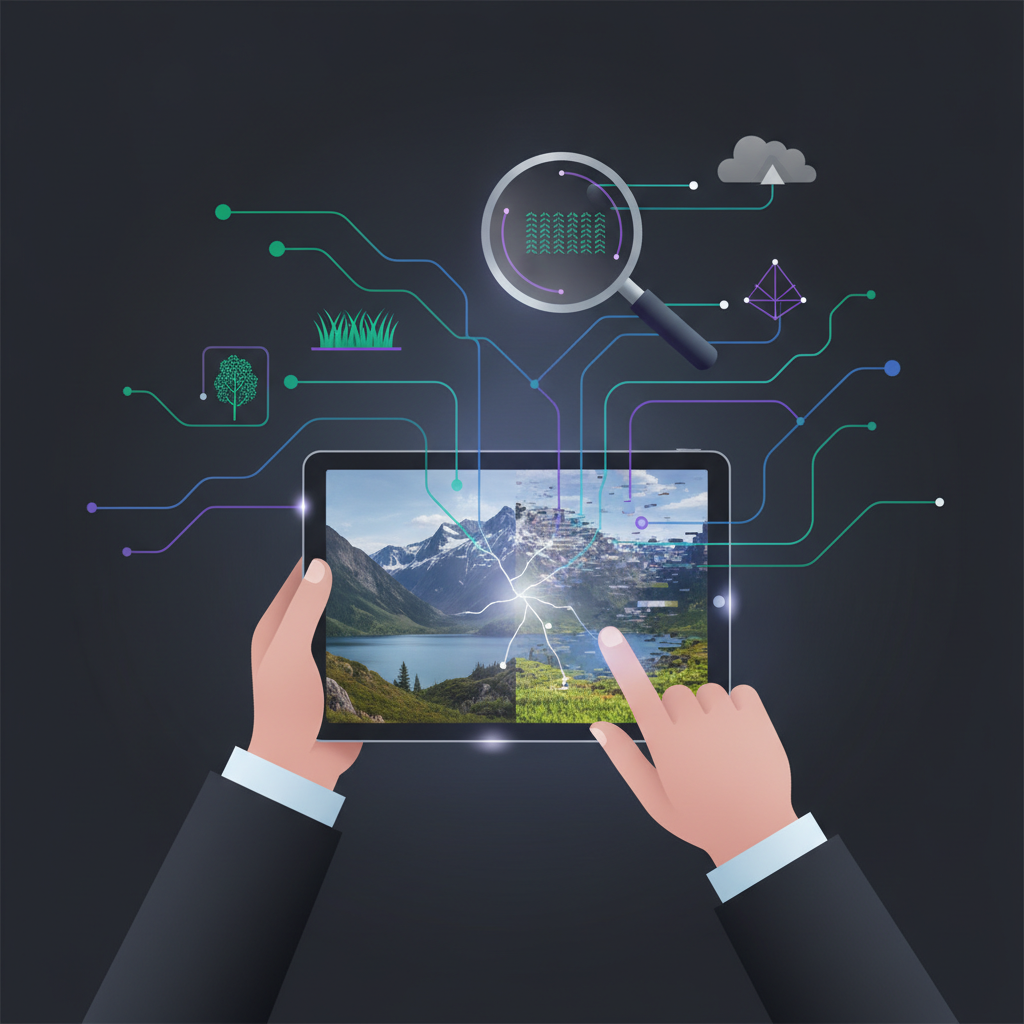
AI-generated images aren't just for sci-fi movies anymore. They're in your social feeds, ads, and news articles. Fast. They're powerful tools. But they bring new challenges to content authenticity. We need to tell the difference. This guide helps you do just that. We'll give you practical ways to identify AI-generated images.
Why does it matter? Your brand's credibility. Your audience's trust. Misinformation. Deepfakes. These are all real consequences of unchecked AI imagery. Let's get sharp.
The “Tells”: What AI Still Gets Wrong
AI is brilliant. But it's not perfect. Yet. There are clear indicators, or “tells,” that give away AI-generated images. Train your eye. You'll start seeing them everywhere.
1. Hands and Fingers: The Uncanny Valley of Digits
This is the classic. AI often struggles with hands. Look for:
- Too many or too few fingers: Sometimes six, sometimes three. It's a common mistake.
- Distorted or twisted fingers: Joints at odd angles. Fingers bending unnaturally.
- Disproportionate hands: Hands that are too large or too small for the body.
- Mismatched hands: One hand looks normal, the other doesn't.
It's the first thing we check. It's often the easiest giveaway. AI models are getting better, fast. But this bug persists.
2. Eyes and Teeth: Mirror, Mirror on the Wall?
Eyes are the windows to the soul. And sometimes, the giveaway for AI. Look for:
- Asymmetry: One eye slightly larger, a different color, or misaligned with the other.
- Unnaturally perfect symmetry: Too perfect. Too glassy or lifeless.
- Inconsistent reflections: Reflections in one eye don't match the other, or don't make sense compositionally.
Teeth are another common struggle:
- Irregular shapes and sizes: Too many teeth, or teeth fusing together.
- Unnatural alignment: Overlapping or randomly spaced teeth.
- Excessive perfection: Sometimes too uniform, like a perfect, unblemished row of Chiclets. Real teeth have character.
3. Backgrounds and Objects: Blurry or Bizarre?
AI often prioritizes the main subject. The background can suffer. It's where the weirdness lives. Look for:
- Inconsistent patterns: Repeating elements that don't quite match. Architectural details that are just a little off.
- Nonsensical text or symbols: AI struggles to generate legible text. It often mashes letters together into gibberish. Brands will have warped logos. Street signs will be unreadable.
- Fuzzy or distorted details: Parts of the background might be blurry, melted, or simply abstract in a way that doesn't fit the natural scene.
- Impossible physics: Objects floating, shadows cast incorrectly, or strange light sources. Look for logical inconsistencies.
Tools to Aid Your Detection
Eyeballing it is a good start. But for content pros, we need more. There are tools evolving to help. They're not perfect, but they're getting smarter.
- AI Detection Tools: Sites like Hugging Face's "AI Image Detector" or "Hive AI Detector" use machine learning to flag synthetic content. Upload an image, get a probability score. Always cross-reference. No single tool is 100% reliable yet. But they're getting there. Keep an eye on new ones.
- Metadata Analysis: Less common for publicly shared images, but sometimes useful. Check if an image retains EXIF data (Exchangeable Image File Format). AI-generated images often lack this. Or it's minimal. Right-click, check properties. It's not a definitive sign, but it adds to the puzzle.
- Reverse Image Search: Google Images, TinEye, or Yandex can help. If an image is AI-generated, it's less likely to have a long history or show up in multiple, credible sources from varying dates. If it's too perfect and appears out of nowhere, be suspicious. This helps check the origin.
The Broader Impact: Why We Need to Be Vigilant
Content authenticity is your brand's shield. As AI gets better, our content creation needs to be smarter. Not just in generating, but in verifying. We've talked about AI copyright and navigating legal ownership. Image detection is the flip side of that coin: verifying source and truth.
Misinformation spreads fast. AI-generated images are powerful vectors. A doctored image can sway opinions, damage reputations, or distort facts. Your role as a content professional means being a gatekeeper. You're ensuring the content you put out is real. And trustworthy. This matters more than ever. We've seen how Google's AI Overviews are changing information consumption. The underlying content must be reliable.
Beyond Detection: Your Content Strategy
So, you know how to spot AI-generated fakes. What next for your content strategy?
- Prioritize Authenticity: Your audience craves realness. Use original photography, licensed stock, or carefully curated ethical AI generations. Be transparent if you use AI. Or better yet, be thoughtful about why you're using it.
- Educate Your Team: Share this knowledge. Make AI image detection part of your content quality control checklist. Build best practices.
- Stay Updated: AI tech moves at warp speed. What's a dead giveaway today might be solved tomorrow. Follow AI news. Test new detection tools. We adapt, always.
AI offers incredible upside for content scaling, like we discussed with Typeform's playbook. But responsibility comes with it. Use these tips to safeguard your content's integrity. Build trust with every image you publish. It's not just about what you create, but what you verify.